 Photo courtesy of Chugoku Shimbun
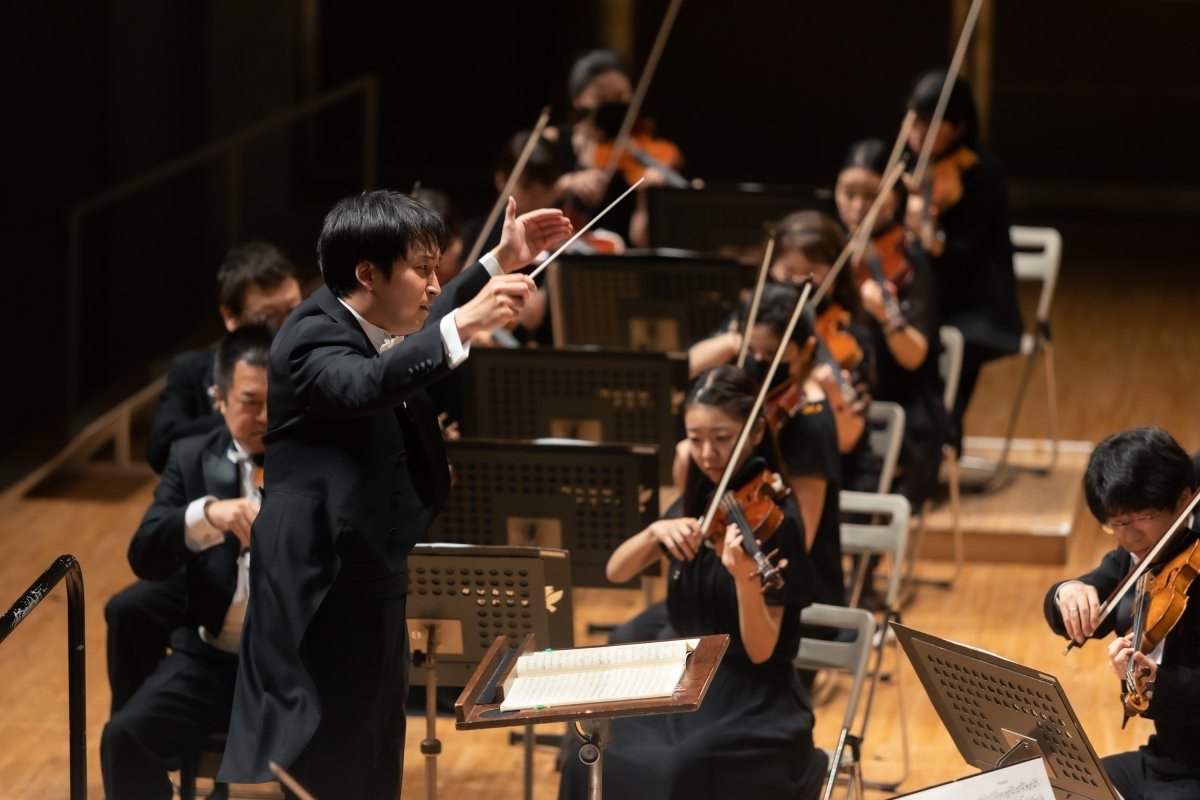
Shun Oi (b. 1993) is a Japanese conductor, pianist, and historical keyboard player. He won First Prize and the Toshio Hosokawa Prize—awarded by the composer himself—at the Hiroshima International Conducting Competition (2022). In 2025 he received Second Prize and the Best Performance of a Classical Symphony award at the Khachaturian International Competition (Conducting).
He began piano at the age of four with Sonoko Hayashi, later studying with Akiyoshi Sako and Jacques Rouvier. He earned a national piano diploma with highest honors from the Conservatoire à rayonnement régional de Paris (CRR de Paris) in 2014 and an artistic diploma (Corso di Alta Formazione) from the Conservatorio di Musica “Agostino Steffani” in Castelfranco Veneto. At the Mozarteum University Salzburg he completed bachelor’s and master’s degrees in both conducting and piano, followed by a postgraduate program in conducting; he also earned a bachelor’s in historically informed performance at the University of Music and Performing Arts Munich (HMTM). Further postgraduate studies in fortepiano were completed at the Schola Cantorum Basiliensis.
His teachers include Bruno Weil, Ion Marin, Alexander Drčar, and Johannes Kalitzke (conducting); Andreas Groethuysen and Massimiliano Ferrati (piano); Christine Schornsheim and Edoardo Torbianelli (harpsichord/fortepiano and basso continuo); and Reinhard Goebel (historically informed performance). He has participated in masterclasses with Menahem Pressler, Ferenc Rados, Alexander Kobrin (piano), Peter Gülke and Vladimir Fedoseyev (conducting), and Clive Brown (HIP).
A Yamaha Music Foundation Fellow (2018–20) and Rohm Music Foundation Fellow (2023), he has appeared as conductor and soloist with the Mozarteumorchester Salzburg, Bad Reichenhaller Philharmonie, Meininger Hofkapelle, Orquestra Sinfónica do Porto Casa da Música, La Musique des Gardiens de la Paix (Paris Police Concert Band), Armenian State Symphony Orchestra, and Yomiuri Nippon Symphony Orchestra, Tokyo Metropolitan Symphony Orchestra, Tokyo Symphony Orchestra, Tokyo Philharmonic Orchestra, Japan Philharmonic, New Japan Philharmonic, Gunma Symphony Orchestra, Nagoya Philharmonic Orchestra, Kyoto Symphony Orchestra, Osaka Philharmonic Orchestra, Osaka Symphony Orchestra, Kobe-City Chamber Orchestra, Hiroshima Symphony Orchestra, and the Hiroshima Wind Orchestra, among others. Festival appearances include La Folle Journée, the Szeged International Music Festival, the Tokyo Metropolitan Arts Festival, Spring Festival in Tokyo and the Takefu International Music Festival.
As a versatile musician, he gave a recital at the State Guest House (Akasaka Palace) on an Érard (1906) from the Imperial Household collection, has appeared on ORF Ö1 and Japanese national television, and writes regularly for leading music publications in Japan.